
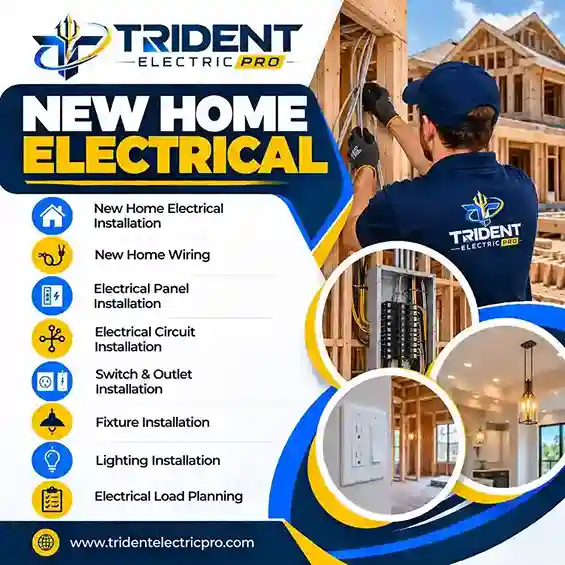
New circuit wiring
Dedicated and general-purpose circuits for new outlets, lighting, appliances and equipment, sized to the load.
Electrical wiring and rewiring for homes and businesses, including new circuits, whole-home and partial rewiring, 240V wiring, additions, remodels, garages and more, from a Washington-licensed electrical contractor.
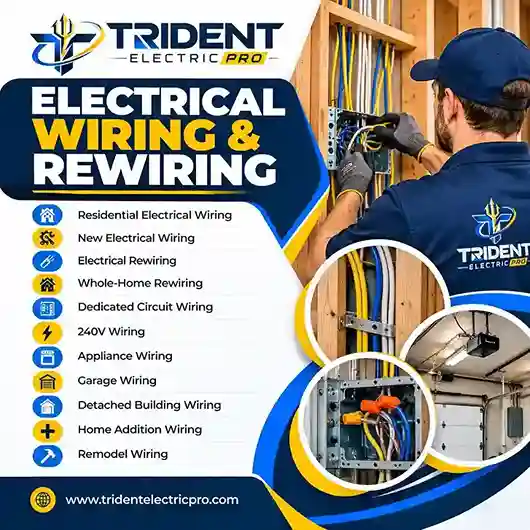
Electrical wiring and rewiring covers installing new circuits and replacing or modifying existing wiring so outlets, lighting, appliances and equipment run safely. Trident Electric handles new circuits, partial and whole-home rewiring, 240V appliance wiring, garage and outbuilding wiring, remodel and addition wiring, and replacement of outdated wiring such as knob-and-tube or aluminum branch circuits.
Best fit: new circuits, damaged or outdated wiring, remodels, additions, equipment connections and any project that changes how a building is wired. Last updated October 8, 2026.
| Service | Electrical wiring and rewiring for homes, businesses and multifamily properties |
|---|---|
| Provider | Trident Electric Pro, Bellevue, WA, serving since 2011 |
| License | WA electrical contractor license TRIDEEL741D4 (verify on L&I) |
| Permit | Commonly required for new circuits and rewiring; varies by jurisdiction |
| Hours | Monday to Saturday, 8:00 AM to 6:00 PM |
| Phone | (855) 599-0507 |
Wiring is the infrastructure behind outlets, lighting, appliances, panels and every other electrical load. The right solution depends on the existing system, equipment, circuit capacity, access, project goals and applicable electrical requirements.
Dedicated and general-purpose circuits for new outlets, lighting, appliances and equipment, sized to the load.
Replacing most or all branch-circuit wiring in older homes, often with a new panel and grounded, code-compliant circuits.
Replacing only unsafe, outdated or inaccessible circuits, such as a kitchen, an addition or a run of two-prong outlets.
Ranges, dryers, EV chargers, heaters, hot tubs and shop equipment that need dedicated 240V circuits.
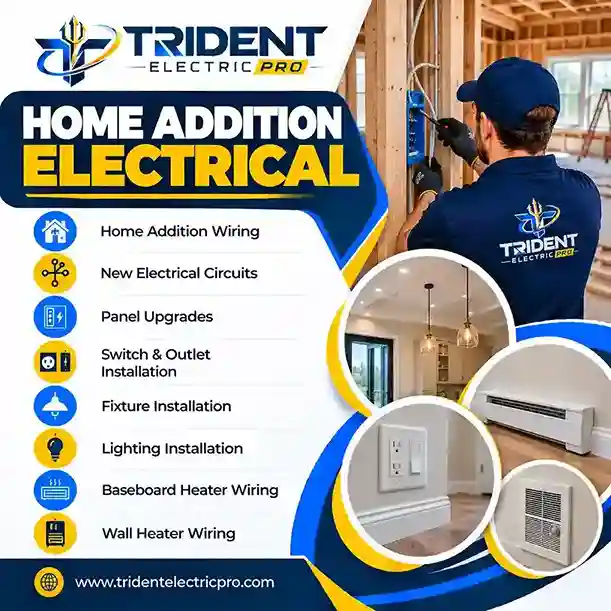
Feeders, subpanels and branch circuits for garages, workshops, ADUs, sheds and outbuildings.
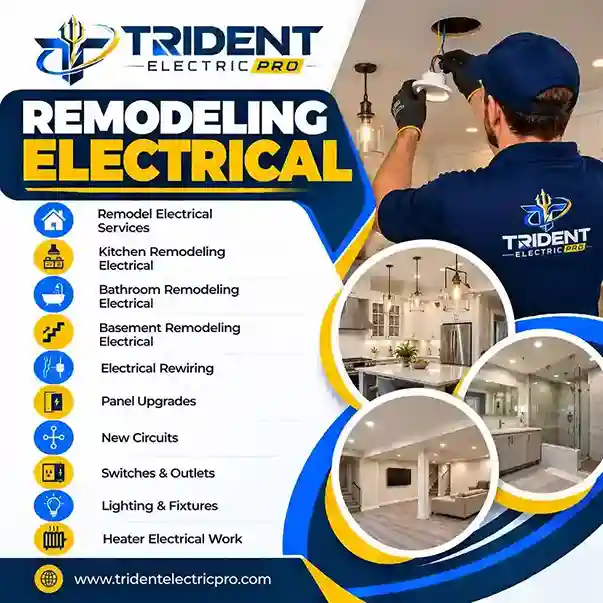
New layouts for kitchens, baths, basements and additions, planned while walls are open.
Evaluation and replacement of knob-and-tube, cloth-insulated, ungrounded or aluminum branch wiring.
Finding and fixing damaged conductors, loose connections, overloaded circuits and dead outlets.
Many homes do not need a full rewire. A targeted repair or partial rewire can solve the problem at a lower cost, and an on-site evaluation shows which applies.
| Option | What it means | Best when |
|---|---|---|
| New wiring | Adding circuits or runs where none exist | New equipment, garages, additions, remodels |
| Partial rewire | Replacing specific circuits or areas | A few unsafe circuits, a kitchen or addition |
| Whole-home rewire | Replacing most or all branch wiring | Widespread old, ungrounded or damaged wiring |
| Repair | Fixing a specific fault or connection | One failed outlet, splice or damaged cable |
These are starting points, not a substitute for an electrical inspection or diagnosis.
Repeated trips, dead circuits or unexplained behavior can point to overloaded or faulty wiring.
Lights that dim when appliances start can indicate loose connections or an overloaded circuit.
Heat, scorch marks or buzzing at a switch or outlet are safety concerns that need prompt attention.
Turn off the affected circuit if it is safe to reach and call a qualified electrician.
They lack an equipment ground and often signal older wiring that may need updating.
Visible in attics, basements and panels of older homes and worth a professional evaluation.
Extension cords and power strips are not a permanent substitute for added circuits.
Unknown splices, mismatched wire sizes and missing boxes are common hidden problems.
Opening walls is the lowest-cost time to correct or redesign wiring.
EV chargers, heat pumps, ranges and hot tubs may need new circuits and added panel capacity.
Homes built before modern standards may contain wiring that was acceptable when installed but does not suit today's loads. Knob-and-tube wiring, common in homes built before roughly the 1950s, has no ground conductor and can overheat when buried in insulation or overloaded. Aluminum branch-circuit wiring, used in many homes from about the mid-1960s to mid-1970s, needs connections rated for aluminum. Two-prong outlets usually mean the circuit has no equipment ground.
Findings like these do not automatically mean a whole-home rewire. Options range from adding grounding and protection devices, to replacing specific circuits, to a full rewire when conditions are widespread.
Understand the layout, equipment, panel capacity and the electrical demand before routing wiring.
Identify existing circuits, wiring types and problem areas, or plan new circuits around the project.
Define the work, pull required permits and plan around access and power shutoffs.
Run new conductors, make connections and install boxes, devices and protection.
Verify polarity, grounding, protection devices and connections before the work is closed up.
Coordinate the required inspection and review the finished work and labeling with you.
Price depends on building size, the number of circuits and outlets, the age and type of existing wiring, how easy walls, attics and crawlspaces are to reach, panel capacity, permit and inspection requirements, and whether wall repair is needed. Rewiring during a remodel, while walls are already open, is often more efficient. Most jobs need an on-site assessment before we can give a scope and price.
Many wiring projects need an electrical permit and inspection, and requirements depend on the work and the jurisdiction. In Washington, the Department of Labor & Industries publishes the state's electrical rules at lni.wa.gov. A new circuit can take hours to a day, while a whole-home rewire commonly takes several days or more.
Whole-home and partial rewiring, 240V circuits, garages, ADUs, remodels and additions.
Tenant improvements, equipment circuits, lighting, subpanels and dedicated wiring. See commercial electrical.
Unit and common-area wiring repairs, code corrections and upgrades. See multifamily electrical.
Do not cut into walls or splice unknown wiring based on assumptions. Hidden conductors can remain energized, and extension cords are not a permanent substitute for required wiring.
Smoke, sparks, burning smells, a hot or buzzing panel, or water near electrical equipment are safety concerns. If it is safe to reach, turn off the affected circuit at the breaker and call a qualified professional. In an emergency such as fire, call 911.
Trident Electric Pro is based at 999 110th Ave NE, Bellevue, WA 98004 and has served customers since 2011. We are listed with Washington L&I under license TRIDEEL741D4 (UBI 606135927), and you can verify it on the L&I site. We are open Monday to Saturday, 8:00 AM to 6:00 PM at (855) 599-0507.
We maintain service-area pages for states across the US. Start with Washington or browse all service areas. Availability and licensing vary by location.
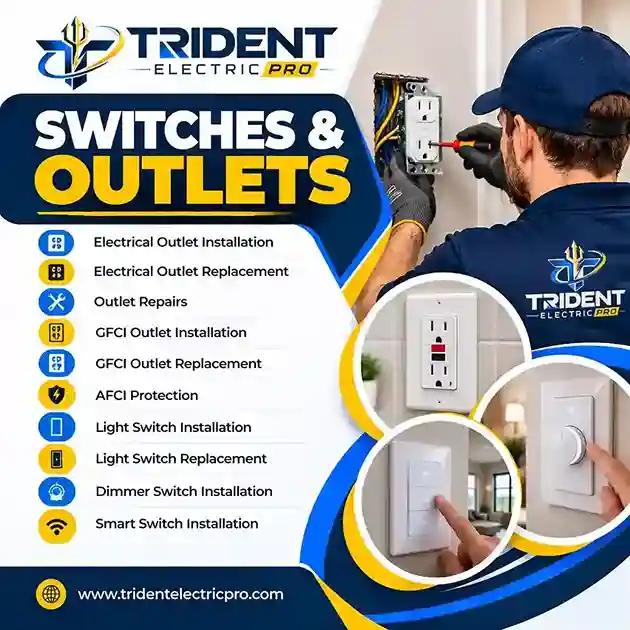
New circuits, outlets, fixtures, fans and smoke and CO detectors.
Learn more →
More services: Lighting & FixturesBaseboard & Wall HeatersGenerator ServicesSurge ProtectionSmart Home ElectricalPool & Hot TubCommercial ElectricalMultifamily Electrical
See the full electrical services directory or browse Trident Electric service areas.
Wiring generally refers to installing or modifying electrical conductors and circuits. Rewiring usually means replacing or substantially changing existing wiring. A partial rewire replaces only the circuits or areas that are unsafe, outdated or being remodeled, while a whole-home rewire replaces most or all of a building's branch-circuit wiring.
Common warning signs include frequently tripping breakers, flickering or dimming lights, warm or discolored outlets, burning smells, buzzing sounds, two-prong ungrounded outlets, visible cloth-insulated or knob-and-tube wiring, and prior DIY work. Only an on-site evaluation by a qualified electrician can confirm whether you need a partial rewire, a full rewire or a smaller repair.
Yes. Remodeling is a common time to add circuits, outlets, lighting, equipment wiring and other electrical changes while walls and ceilings are open and access is easier and usually less costly.
Many 240V appliances, such as ranges, dryers, EV chargers, heaters and hot tubs, require a dedicated, appropriately sized circuit with matching wire, breaker and receptacle. The exact requirements depend on the equipment nameplate and your electrical system's capacity.
In most jurisdictions, new circuits and rewiring require an electrical permit and an inspection. Requirements depend on the work and the location. In Washington, the Department of Labor & Industries publishes the state's electrical rules, and a licensed contractor can explain what applies to your project.
A single new circuit may take hours to a day. A whole-home rewire commonly takes several days and can run longer for larger or harder-to-access buildings. Access, the age of the wiring, panel condition and inspection scheduling all affect the timeline.
Not always. Partial work is often done with the home occupied and power off only to the affected circuits. Whole-home rewiring can mean extended power interruptions, so some households choose to stay elsewhere for part of the project. Ask for a plan before work starts.
Wiring in finished walls may require small access openings, and some jobs involve fishing wire through existing cavities to limit damage. Patching and painting are normally done by a drywall or painting contractor after the electrical work and inspection.
Not automatically, but both are older wiring types that deserve professional evaluation. Knob-and-tube has no ground and can be a problem when covered by insulation or overloaded. Aluminum branch-circuit wiring from roughly the mid-1960s to mid-1970s needs properly rated connections. Options range from targeted repair to replacement.
Cost depends on the building's size, the number of circuits and outlets, wiring type and age, access to walls and attics, panel capacity, permit and inspection requirements, and whether wall repair is needed. Many jobs need an on-site assessment before a scope and price can be given.
Trident Electric is listed with the Washington State Department of Labor & Industries under electrical contractor license TRIDEEL741D4 (UBI 606135927). You can check the current status on the L&I license verification page. Licensing requirements differ by state.
Call Trident Electric at (855) 599-0507 or contact us to describe your wiring project or problem. Open Monday to Saturday, 8:00 AM to 6:00 PM.
Call Trident Electric