
Planning for outages
A backup-power plan should identify what loads need to remain powered and how they will be transferred.
Generator services for reliable backup power, including generator installation, standby systems, whole-home generators, wiring, transfer switches, maintenance, and repairs.
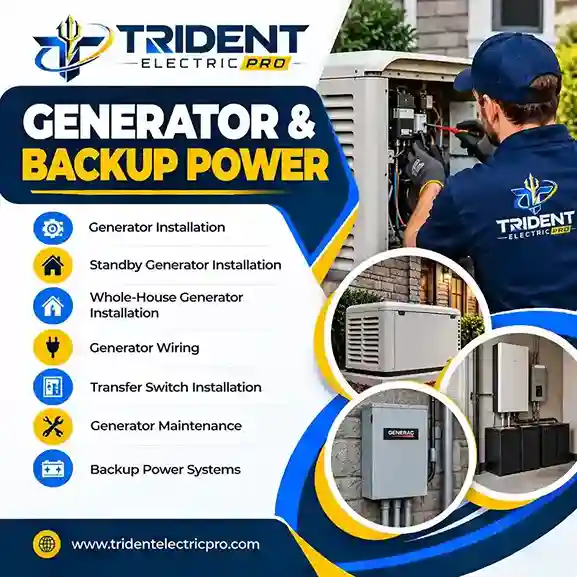
Backup power systems need more than a generator. The electrical connection, transfer equipment, selected loads, wiring, grounding, and controls all need to work together. Trident Electric provides electrical services associated with standby and backup power systems.
Best fit: Homes and businesses that need backup-power electrical work, including generator connections, transfer equipment, dedicated circuits, repairs, and system changes.
Backup power systems need more than a generator. The electrical connection, transfer equipment, selected loads, wiring, grounding, and controls all need to work together. Trident Electric provides electrical services associated with standby and backup power systems.
The right electrical solution depends on the existing system, equipment, circuit capacity, access, project goals, and applicable electrical requirements. Trident Electric's service pages are organized by job type so homeowners, businesses, and property managers can quickly find the closest match.
Service availability, licensing, permitting, and requirements can vary by jurisdiction. When the project is location-specific, use the service-area directory to find the relevant city and state page.
These are useful starting points, not a substitute for an electrical inspection or diagnosis.
A backup-power plan should identify what loads need to remain powered and how they will be transferred.
The issue may involve transfer equipment, wiring, controls, protection, or the generator itself.
A new system requires an electrical connection designed around the generator and building loads.
Adding more equipment may require reviewing the backup-power configuration.
Transfer equipment is critical to separating utility and generator power correctly.
Commercial sites may need a more deliberate backup-power electrical plan for critical loads.
Identify which circuits and equipment need backup power.
Evaluate the generator, transfer equipment, existing system, and intended backup loads.
Install or modify the electrical connections required for the backup-power system.
Verify the electrical path and transfer operation as appropriate.
Never backfeed a building through an improvised generator connection or use a portable generator in a way that can energize utility lines. Generator transfer equipment and connections should be professionally installed and tested.
For electrical faults, panel work, new circuits, high-load equipment, wet-location electrical work, or concealed wiring, a qualified electrical professional can evaluate the system and determine the appropriate next step.
Need a different type of electrical service? Visit the full electrical services directory or browse Trident Electric service areas.
It may be possible depending on generator capacity, electrical service, transfer equipment, and which loads are included. A system should be designed around the actual load requirements.
Transfer equipment controls how electrical loads are supplied by utility or generator power and helps prevent unsafe interconnection between sources.
Commercial electrical services can include generator and backup-power electrical work, depending on the project scope and applicable requirements.
Call Trident Electric at (855) 599-0507 to discuss your electrical project or problem. You can also review the service-area directory for location-specific pages.
Call Trident Electric