Overloaded circuit
Too much load on one circuit heats the wire, so the breaker trips after a few minutes of use. Common with space heaters, hair dryers and kitchen appliances. The fix may be moving loads or adding a dedicated circuit.
Tripping breakers, dead outlets, flickering lights or lost power? Trident Electric finds the cause of the fault, repairs it safely and tests the result, so the problem does not keep coming back.
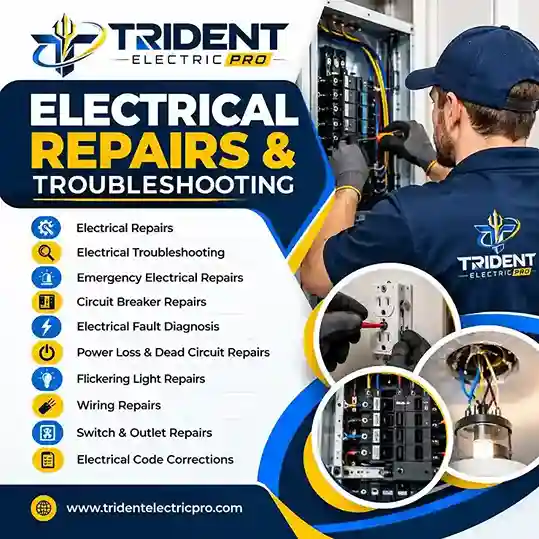
Electrical repair is the diagnosis and correction of an existing electrical fault, such as a breaker that keeps tripping, a dead or warm outlet, flickering lights or lost power. A licensed electrician tests the circuit to find the cause, repairs or replaces the failed part, and verifies the fix before leaving. Trident Electric does this for homes, businesses and multifamily properties from Bellevue, WA.
Last updated October 8, 2026 by the Trident Electric team.
Repair work starts with an existing symptom rather than a planned upgrade. We trace the circuit, identify whether the problem is a device, a connection, the wiring or the panel, and correct it at the source.
When a repair reveals a bigger issue, such as undersized capacity, deteriorated wiring or a failing panel, we explain the options so you can decide between a targeted fix and an upgrade. Work for new equipment and planned changes is covered on our installation and panel upgrade pages.
Use this table to understand what may be happening and what a repair involves. It is a starting point, not a diagnosis.
| What you notice | Common causes | What a repair involves |
|---|---|---|
| Breaker trips as soon as you reset it | Short circuit or ground fault in the wiring, a device or an appliance | Isolate the circuit, test it, locate the fault and repair it |
| Breaker trips after running a while | Overload from several loads on one circuit, heat from a heater or appliance, or a worn breaker | Check the load, redistribute it or add a circuit, and test or replace the breaker |
| Outlet has no power | Tripped GFCI elsewhere on the circuit, loose connection, failed device or broken conductor | Trace the circuit, then repair the connection or replace the device |
| Outlet or switch is warm, buzzing or discolored | Loose terminals, overloaded device or arcing | Turn off the circuit, stop using it and call for prompt repair |
| Lights flicker in one fixture | Loose bulb or fixture connection, dimmer mismatch or failing fixture | Inspect the fixture, switch and dimmer, then repair or replace |
| Lights dim or flicker across the home | Heavy appliance starting, loose neutral or panel connection, or a service-side issue | Test voltage and connections; the utility may need to be involved if the issue is on its side |
| Half the home has no power | Loss of one 120V leg of the service, failed main or panel component, or a utility-side problem | Test at the panel and service, then repair or coordinate with the utility |
| Burning smell or visible scorching | Overheated connection or damaged insulation | Treat as urgent: shut off the circuit if safe, then call a professional |
| Mild shock or tingle from a fixture or appliance | Grounding or neutral problem | Stop using it and have the circuit tested and corrected |
A breaker trips to protect the wiring. The pattern of tripping points to the cause: instantly on reset suggests a short or ground fault, while tripping after minutes of use suggests overload or heat.
Too much load on one circuit heats the wire, so the breaker trips after a few minutes of use. Common with space heaters, hair dryers and kitchen appliances. The fix may be moving loads or adding a dedicated circuit.
A hot conductor touches a neutral or ground conductor, causing a sudden surge. The breaker usually trips instantly, sometimes with a pop or scorch mark. This needs a licensed electrician.
Current escapes along an unintended path, often from moisture or a damaged appliance. GFCI outlets and breakers trip to prevent shock, so repeated trips mean the source must be found.
Damaged cable, a loose wire connection or a nail through a wire can arc and overheat. AFCI breakers trip on this, most often on bedroom and living-area circuits.
A breaker can trip below its rating or fail to hold after years of use or heat. Test the circuit first, because replacing the breaker will not fix a fault in the wiring.
A loose or heat-damaged connection can trip breakers at random or cause flickering throughout the home. This is panel work that should only be handled by a professional.
Tell us what is happening, when, and which room, circuit or equipment is involved. Photos help.
We test the circuit and components to find the source instead of guessing at parts.
You hear whether a repair, replacement, rewiring or upgrade fits, before work begins.
The fix is completed and tested, with any required permit and inspection handled for the scope.
Repair cost is driven by the nature of the fault and how much work it takes to reach and fix it. Many repairs need an on-site assessment before a scope and price can be set, because the cause is not visible until the circuit is tested.
A single failed device or loose connection is usually a targeted repair. Repeated failures across a house, two-prong outlets, aluminum or deteriorated wiring may point to rewiring. A full, outdated or overheating panel may call for a panel upgrade. Permit rules depend on the work and the jurisdiction. In Washington, the state publishes electrical rules at lni.wa.gov.
Trident Electric has served homes, businesses and property managers from Bellevue, WA since 2011. We are listed with the Washington State Department of Labor & Industries under electrical contractor license.
We serve homeowners, commercial clients and multifamily owners. Licensing and permit requirements vary by state, so call to confirm service for your address or see our service areas.
A repair often leads to related work. These are the services customers most often need next.
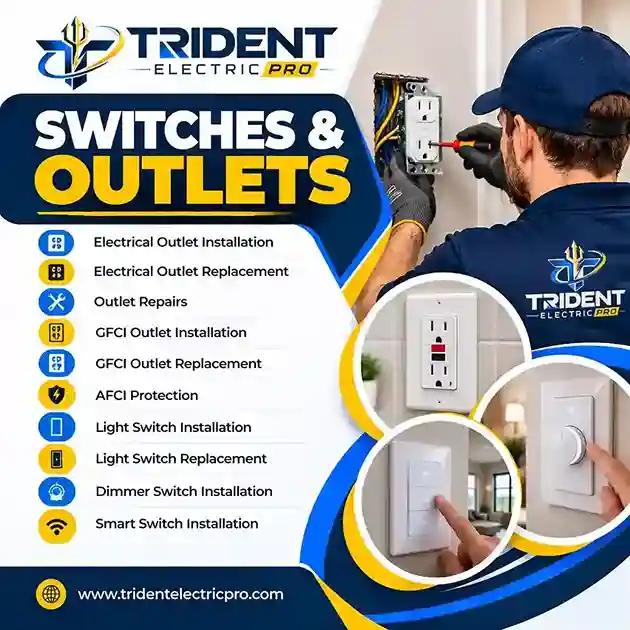
Dead, loose, warm or damaged outlets and switches, GFCI and AFCI protection, and dimmers.
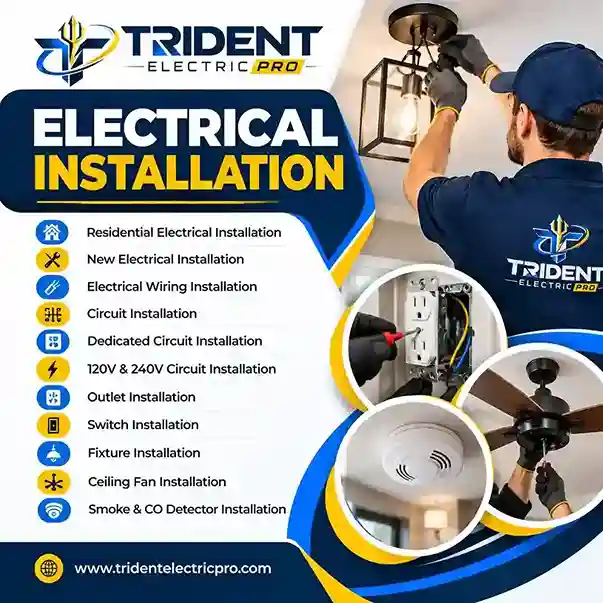
View Switches & Outlets detailsNew circuits, fixtures, ceiling fans, detectors and dedicated 120V and 240V lines.
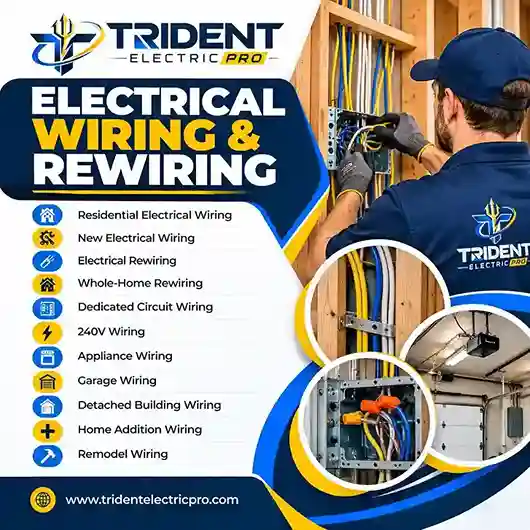
View Electrical Installation detailsRewiring for older homes, two-prong outlets and wiring that keeps failing.
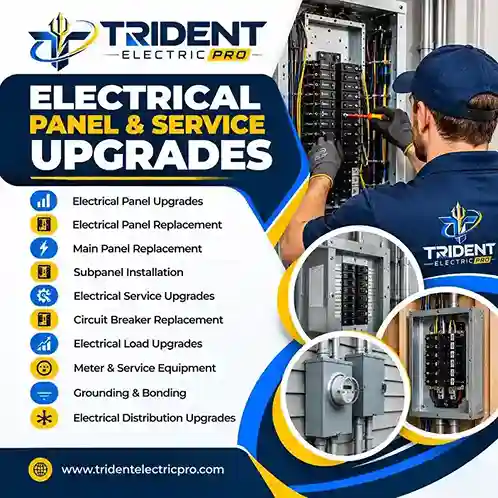
View Electrical Wiring & Rewiring detailsFull, outdated or failing panels, subpanels and added capacity.
View Panel & Service Upgrades detailsWhole-house protection for appliances and electronics from voltage spikes.
View Surge Protection detailsFixture, dimmer and ceiling fan repair, replacement and installation.
View Lighting & Electrical Fixtures detailsAlso see EV charger installation, generator services and the full electrical services directory.
A breaker keeps tripping because of an overloaded circuit, a short circuit, a ground fault, an arc fault, or a worn breaker. If it trips right after you reset it with nothing plugged in, the fault is likely in the wiring and needs a licensed electrician to locate it.
No. A breaker trips to stop dangerous heat or current. Reset it once after unplugging devices on that circuit, and if it trips again, leave it off and call an electrician instead of resetting it repeatedly.
Flickering usually comes from a loose bulb or fixture connection, a dimmer that is incompatible with the bulbs, a loose connection in a switch or the panel, or a heavy appliance starting on the same circuit. Flickering throughout the home, or with a burning smell, should be inspected promptly.
A tripped GFCI outlet elsewhere on the circuit, a loose connection behind the outlet, a failed device or a broken wire are the usual causes. Press RESET on nearby GFCI outlets (kitchen, bath, garage, exterior); if the outlet is still dead, have it traced.
Breaker replacement involves working inside the electrical panel, where parts stay energized, so it should be left to a qualified professional. Outlet and switch replacement is also best handled by a licensed electrician, especially if you see damage, heat, or aluminum or older wiring.
Cost depends on the scope of the fault, how hard the wiring is to reach, the condition and capacity of the existing wiring and panel, the parts needed, and permit and inspection requirements. Many repairs need an on-site assessment before a scope and price can be given.
It depends on the work and the jurisdiction. Replacing a failed device is often treated differently from adding circuits or changing a panel, which commonly need a permit and inspection. We explain what applies to your project before work starts.
A like-for-like device replacement can be quick. A hidden fault, such as a short inside a wall or an intermittent connection, takes longer because the circuit has to be traced and tested before the repair.
If you see fire, smoke, or arcing, leave the area and call 911. For a burning smell, a hot or buzzing panel, or water near electrical equipment, switch off the affected circuit only if it is safe to reach, stay away from the area, and call a qualified electrician.
Trident Electric is based at 999 110th Ave NE, Bellevue, WA 98004 and is listed with Washington L&I under electrical contractor. Service-area pages cover multiple states; call to confirm availability and licensing for your address.
Call Trident Electric at (855) 599-0507, Monday to Saturday, 8:00 AM to 6:00 PM, or describe the problem on our contact page. Browse service areas for location-specific pages.