Apartments • Condos • Townhomes • Mixed-Use

Multifamily Electrical Services for Apartments & Property Managers

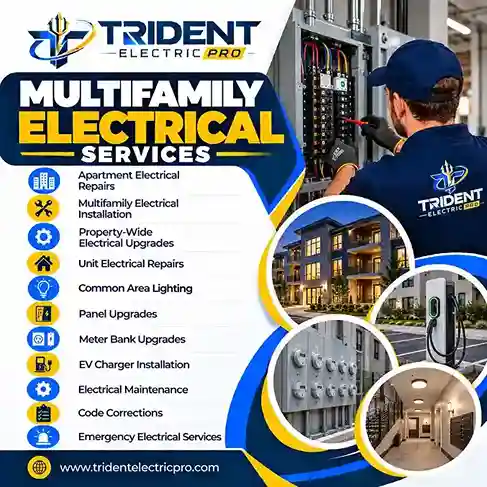
Unit repairs, turnover electrical work, common-area lighting, panel and meter upgrades, EV charging circuits, and code corrections, planned around residents and your property team.

Unit & common-area workResident-aware shutdown planningTurnover-ready schedulingOne call for every electrical need
Electrician performing multifamily electrical services at an apartment property for Trident Electric
Direct Answer

What are multifamily electrical services?

Multifamily electrical services are repairs, upgrades, and new installations for buildings with multiple dwelling units: in-unit wiring, outlets, and lighting, shared-area lighting and controls, panels and meter equipment, and EV charging circuits. Trident Electric performs this work for apartment communities, condos, townhomes, and mixed-use properties, coordinating outages and access with residents and property staff.

Best fit: owners, property managers, maintenance teams, HOAs, and contractors who need dependable electrical service across units and shared spaces.

Last updated October 2026

At a Glance

Multifamily electrical services: quick facts

Property typesApartment communities, condominiums, townhome developments, duplexes and fourplexes, student and senior housing, mixed-use buildings
Work areasDwelling units, hallways and stairwells, laundry and amenity rooms, parking areas, exterior and site lighting, electrical and meter rooms
Typical jobsTroubleshooting and repairs, unit turnover electrical, lighting upgrades, new circuits, panel and service upgrades, EV charging, surge protection, generators, code corrections
Who we work withProperty owners, property managers, maintenance supervisors, HOAs and condo boards, general contractors
How to startCall (855) 599-0507 or use the contact page and describe the property and the problem
Service Scope

What our multifamily electrical work covers

Multifamily buildings share electrical infrastructure, so a problem in one place can affect many households. We organize the work into three areas so your team can scope projects clearly.

1

Inside the units

  • Tripped breakers, dead outlets, flickering lights
  • Outlet, switch, and fixture replacement
  • GFCI and AFCI protection where required
  • Ceiling fans, dedicated appliance circuits
  • Baseboard and wall heater wiring
  • Smoke and CO alarm power and interconnect
2

Common areas & exterior

  • Hallway, stairwell, and laundry-room lighting
  • Parking and site lighting, photocells, timers
  • Occupancy sensors and lighting controls
  • Exit and emergency lighting repairs
  • Amenity spaces and leasing offices
  • Outdoor receptacles and power for site equipment
3

Building systems & capacity

  • House panels, subpanels, and meter equipment
  • Service and panel upgrades
  • EV charging circuits and load planning
  • Whole-building surge protection
  • Generator and transfer switch connections
  • Electrical corrections after inspections

The right solution depends on the existing system, available capacity, equipment, access, project goals, and applicable electrical requirements. Service availability, licensing, and permitting vary by jurisdiction. For location-specific information, visit the service-area directory.

Related Electrical Services

Electrical services that connect to multifamily projects

Most multifamily projects touch more than one service. Explore the pages below for details on each.

Looking for something else? See the full electrical services directory.

Troubleshooting Guide

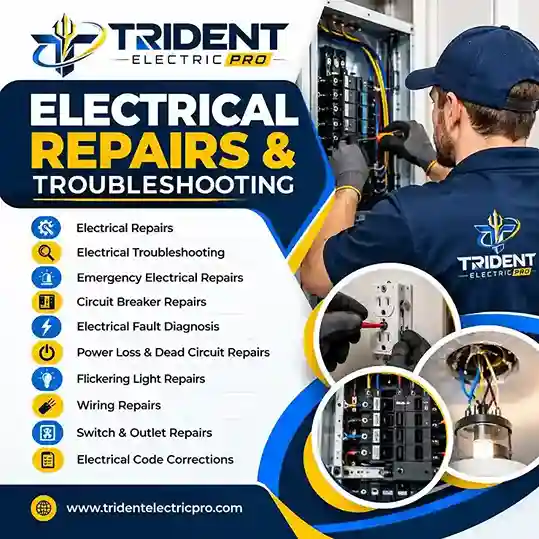
Common multifamily electrical problems and what usually causes them

A starting point for property teams. It is not a substitute for an on-site diagnosis.

SymptomCommon causesWhat an electrician does
Breaker trips repeatedly in one unitOverloaded circuit, failing breaker, ground or arc fault, faulty applianceIsolates the circuit, tests the wiring and breaker, repairs or replaces components, and corrects the load
Lights flicker or dim across several unitsLoose connections, failing panel or service equipment, utility-side issueInspects and tightens connections, tests voltage, and coordinates with the utility when the cause is upstream
Dead outlets after a move-outTripped GFCI elsewhere on the circuit, worn devices, loose connectionsTests the circuit, replaces worn devices, and adds GFCI or AFCI protection where current requirements call for it
Hallway or parking lights outFailed photocell or timer, failed driver or ballast, damaged feedRepairs controls and wiring, often converting fixtures to LED with updated controls
Warm, discolored, or buzzing panelOverheated connections, failing breaker, overloaded serviceUrgent evaluation, repair, or replacement. If you see smoke or fire, leave and call 911
Older building with aluminum branch wiringConnection problems at outlets, switches, and fixturesEvaluates the wiring and recommends remediation methods suited to the building and the applicable code
When to Call

Signs your property needs multifamily electrical service

Repeated issues across units

Recurring faults in several units can point to a shared cause, such as panel, feeder, or wiring-method problems, and benefit from consistent troubleshooting and documentation.

Common-area lighting failures

Dark hallways, stairwells, and parking areas affect resident safety and generate complaints. Reliable lighting and controls reduce repeat service calls.

A unit is turning over

Move-outs are the best time to test and replace worn devices, address inspection items, and update lighting.

You are adding EV charging

Resident demand for charging grows quickly and needs load and circuit planning before equipment is chosen.

Aging panels or service equipment

Old, overloaded, or obsolete equipment may need repair, replacement, or a capacity upgrade.

A renovation or insurance request

Renovations can affect many units, and inspections or insurers sometimes request electrical corrections.

Unit Turnover

Electrical work for apartment unit turnover

A vacant unit is the easiest time to fix electrical issues without disturbing a resident. A turnover electrical visit is typically scoped around a short checklist, so each unit is ready on a predictable timeline.

  • Test every outlet and switch, and replace worn or loose devices
  • Add or verify GFCI and AFCI protection where current requirements call for it
  • Replace damaged, outdated, or missing light fixtures and covers
  • Install or replace ceiling fans and verify their wiring
  • Check smoke and CO alarm power and interconnection
  • Correct reversed polarity, open grounds, and loose connections
  • Verify dedicated circuits for appliances and heaters
  • Label panel directories so future service is faster

Because the unit is empty, the work can often be completed in a single visit. Property teams that send a list of units in advance usually get the best scheduling.

Common Areas

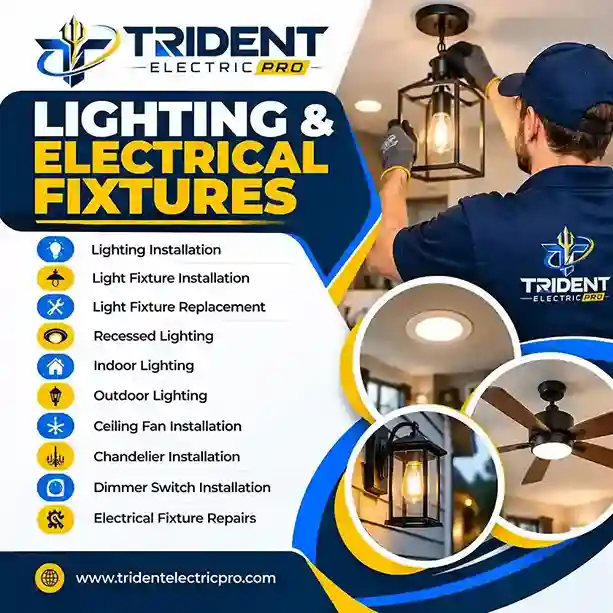
Common-area, parking, and exterior lighting

Shared spaces run on their own circuits, controls, and schedules, and failures there are visible to every resident. Common-area electrical work includes repairing failed fixtures and drivers, replacing photocells and timers, adding occupancy sensors in stairwells and corridors, and correcting damaged feeds to site and parking lighting.

Many properties use these repairs as an opportunity to move to LED fixtures with modern controls, which can reduce maintenance visits and energy use. Check with your utility, since efficiency incentives are sometimes available for qualifying lighting upgrades.

Exit and emergency lighting in corridors and stairwells are life-safety systems and are typically checked as part of fire and building inspections. If an inspector has flagged lighting items, we can help you correct them.

Common-area checklist

  • Hallway and stairwell lighting
  • Parking and pole lighting
  • Photocells, timers, and controls
  • Exit and emergency lighting repairs
  • Laundry and amenity room circuits
  • Exterior receptacles and site power
EV Charging

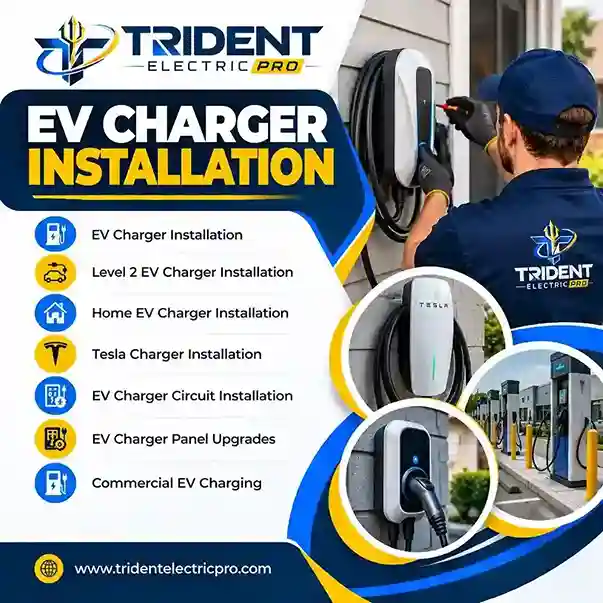
EV charging electrical for apartments and multifamily properties

Adding chargers to a multifamily property is mainly an electrical capacity question. Before choosing equipment, the property needs to know how much power is available, where chargers can practically be located, and how charging will be metered and managed.

What we evaluate

  • Available capacity at the service, house panel, or tenant panel
  • Whether chargers connect to the house meter or a tenant meter
  • Dedicated circuits versus shared, load-managed charging
  • Distance, conduit routing, trenching, and parking layout
  • Charger quantity now and room to add more later
  • Panel or service upgrades, permits, and utility coordination

Level 2 charging typically uses a 240V circuit. Multiple chargers on a limited service can often share capacity through energy management, which may avoid or reduce the cost of a service upgrade. Requirements and incentives for multifamily charging vary by state, city, and utility, so confirm local rules early. See our EV charger installation page for more.

Panels & Capacity

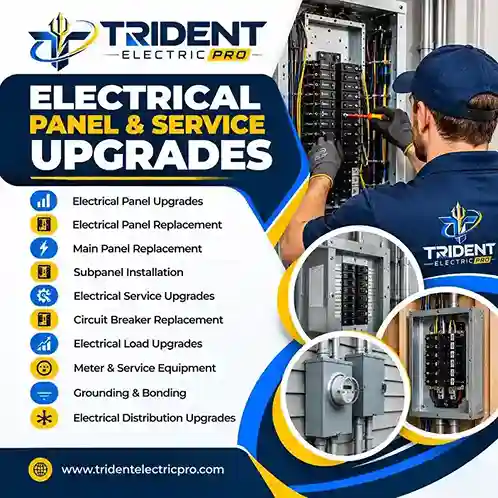
Panel, meter, and service upgrades for multifamily buildings

Capacity is the limit that stops many multifamily projects, whether that is EV charging, electric heating, renovated kitchens, or added amenities. Panel and service work in a multifamily building involves calculating the connected load, selecting equipment sized for it, pulling permits, and coordinating with the utility. Because outages affect residents, the work is sequenced to keep shutdowns short and well communicated.

Signs that equipment deserves attention include breakers that trip under normal use, panels that run warm, equipment from brands that inspectors commonly flag, no spare breaker spaces, and visible corrosion or damage. Learn more on our electrical panel upgrades page, and see surge protection for guarding building equipment after an upgrade.

How the Work Starts

Our multifamily electrical service process

01

Call and scope

Tell us the property, the problem or project, and your timeline. We identify the units, areas, and equipment involved.

02

Walk the site

We review the existing electrical system, access, capacity, and any inspection items to confirm the scope.

03

Plan access and outages

We agree on schedules, unit access, and any shutdown windows with property staff.

04

Notify residents

Affected residents get notice of timing and what to expect, with outages kept as short as practical.

05

Complete the work

We perform the repairs, installations, or upgrades within the agreed scope and applicable requirements.

06

Test and document

We test the work and document what was done, unit by unit or area by area, for your records.

Our Approach

How we support property managers and owners

Built for property teams

Clear scopes, predictable scheduling, and records you can file, so your maintenance team always knows what changed.

Considerate of residents

Access and shutdowns are planned in advance to reduce disruption for the people who live in the building.

One electrical partner

Repairs, panels, lighting, EV charging, generators, and surge protection from a single contractor.

Cost Factors

What affects the cost of multifamily electrical work

Multifamily electrical pricing varies too much to quote responsibly without details. These are the main factors:

  • Scope: repair, replacement, or new installation
  • Number of units, buildings, or areas involved
  • Access, working height, and existing conditions
  • Equipment, fixtures, and materials selected
  • Permit and inspection requirements
  • Panel or service capacity upgrades
  • Scheduling constraints and after-hours work
Safety First

Leave hazardous electrical work to qualified professionals

Multifamily electrical systems affect many residents. For faults, panel work, new circuits, high-load equipment, wet locations, or concealed wiring, hire a qualified, licensed electrical professional and confirm the license in your jurisdiction.

Permit and inspection requirements vary by location, and panel, service, and EV charging projects commonly need them.

Project Preparation

Helpful information to have when you call

  • Property address and type
  • What is happening or being added
  • Which units, circuits, panels, or equipment are involved
  • Whether the issue is constant or intermittent
  • Equipment models or specifications, if available
  • Photos of the affected area, when safe to take
Key Terms

Multifamily electrical glossary

Multifamily property
A building or community with multiple separate dwelling units, such as apartments, condominiums, or townhomes.
Common area
Shared spaces such as corridors, stairwells, laundry rooms, parking areas, and amenity rooms.
House meter and tenant meter
A house meter serves shared loads the owner pays for. A tenant meter serves an individual unit.
Load calculation
An engineering calculation of electrical demand used to size panels, feeders, and services.
Unit turnover
The work done between one resident leaving and the next moving in, including electrical testing and repairs.
Load management
Controls that share limited electrical capacity among several loads, such as EV chargers.
Service Area

Where Trident Electric provides multifamily electrical service

Trident Electric is based in Bellevue, Washington, and organizes its service pages by state and city. Availability, licensing, and permit requirements differ by location, so start with the service-area directory to find the page for your city, or call (855) 599-0507 to confirm service for your property.

FAQ

Frequently asked questions about multifamily electrical services

What are multifamily electrical services?

Multifamily electrical services are repairs, upgrades, and new installations for buildings that contain multiple dwelling units, such as apartment communities, condominiums, and townhome complexes. The work covers in-unit wiring, outlets, switches, and lighting, shared-area lighting and controls, panels and metering equipment, and newer loads such as EV charging.

Can you service individual apartment units?

Yes. Unit-level work can include troubleshooting tripped breakers and dead outlets, replacing switches, outlets, and fixtures, adding circuits, and wiring for appliances or renovations. Work is scoped per unit or per building so property staff can track what was done and where.

Can common-area lighting be repaired or upgraded?

Yes. Common-area electrical work can include hallway, stairwell, laundry-room, parking, and exterior lighting, plus photocells, timers, occupancy sensors, and the wiring behind them. Many properties pair repairs with LED upgrades to cut maintenance calls and energy use.

Can you help with EV charging for multifamily properties?

Yes. Multifamily EV charging starts with checking available electrical capacity, deciding where the chargers will go, and choosing between dedicated circuits and shared, load-managed circuits. Trident Electric plans and installs the electrical side, including conduit, circuits, and panel or service upgrades when capacity is the limit.

How is multifamily electrical work different from single-family residential work?

A multifamily building shares electrical infrastructure among many households, so one fault or shutdown can affect several residents. Work often involves meter banks, house panels, common-area circuits, access coordination, and resident notice, in addition to the unit-level work an electrician would do in a single home.

How do you handle power shutdowns when residents live in the building?

Shutdowns are planned in advance whenever the work allows. That means identifying which units or areas lose power, agreeing on a time window with property management, giving residents notice, and limiting the outage to the shortest practical period. Emergency repairs may require shorter notice.

Do you do electrical work during unit turnover?

Yes. Turnover electrical work commonly includes testing and replacing worn outlets and switches, adding GFCI or AFCI protection where current requirements call for it, replacing fixtures and ceiling fans, checking smoke and CO alarm power, and correcting issues found during move-out inspections.

How much does multifamily electrical work cost?

Cost depends on the scope, the number of units or areas involved, access, equipment and materials, permit requirements, and whether panel or service capacity must be upgraded. Describing the property, the problem, and your timeline when you call (855) 599-0507 lets Trident Electric scope the work accurately.

Can you work on older buildings with outdated panels or aluminum wiring?

Older buildings are a regular part of multifamily work. An electrician can evaluate aging panels, obsolete breaker brands, overloaded circuits, and aluminum branch wiring connections, then recommend repair, replacement, or remediation methods that fit the building and the applicable code.

Can you upgrade a main panel, meter bank, or service for an apartment building?

Panel and service upgrades are a core multifamily need, especially when adding EV charging, electric heating, or renovated units. These projects involve load calculations, equipment selection, permits, and coordination with the utility and property staff to manage outages.

Do multifamily electrical projects need permits and inspections?

Many do. Permit and inspection requirements depend on the jurisdiction and the type of work, and panel, service, new-circuit, and EV charging projects commonly require them. Confirm local requirements early; Trident Electric can help you understand what applies to your project.

What should I have ready when I call?

It helps to know the property address and type, what is happening or being added, which units, circuits, panels, or equipment are involved, whether the problem is constant or intermittent, and any equipment model numbers. Photos of the affected area are useful when it is safe to take them.

What if I smell burning or see sparks or smoke?

Treat it as an emergency. If there is smoke, fire, or immediate danger, leave the area and call 911. If it is safe to do so, switch off the affected circuit, keep residents away from the equipment, and then call an electrician.
Get Started

Need multifamily electrical service?

Call Trident Electric at (855) 599-0507 to discuss your property, the problem, and your timeline. You can also browse the full services list or service areas.